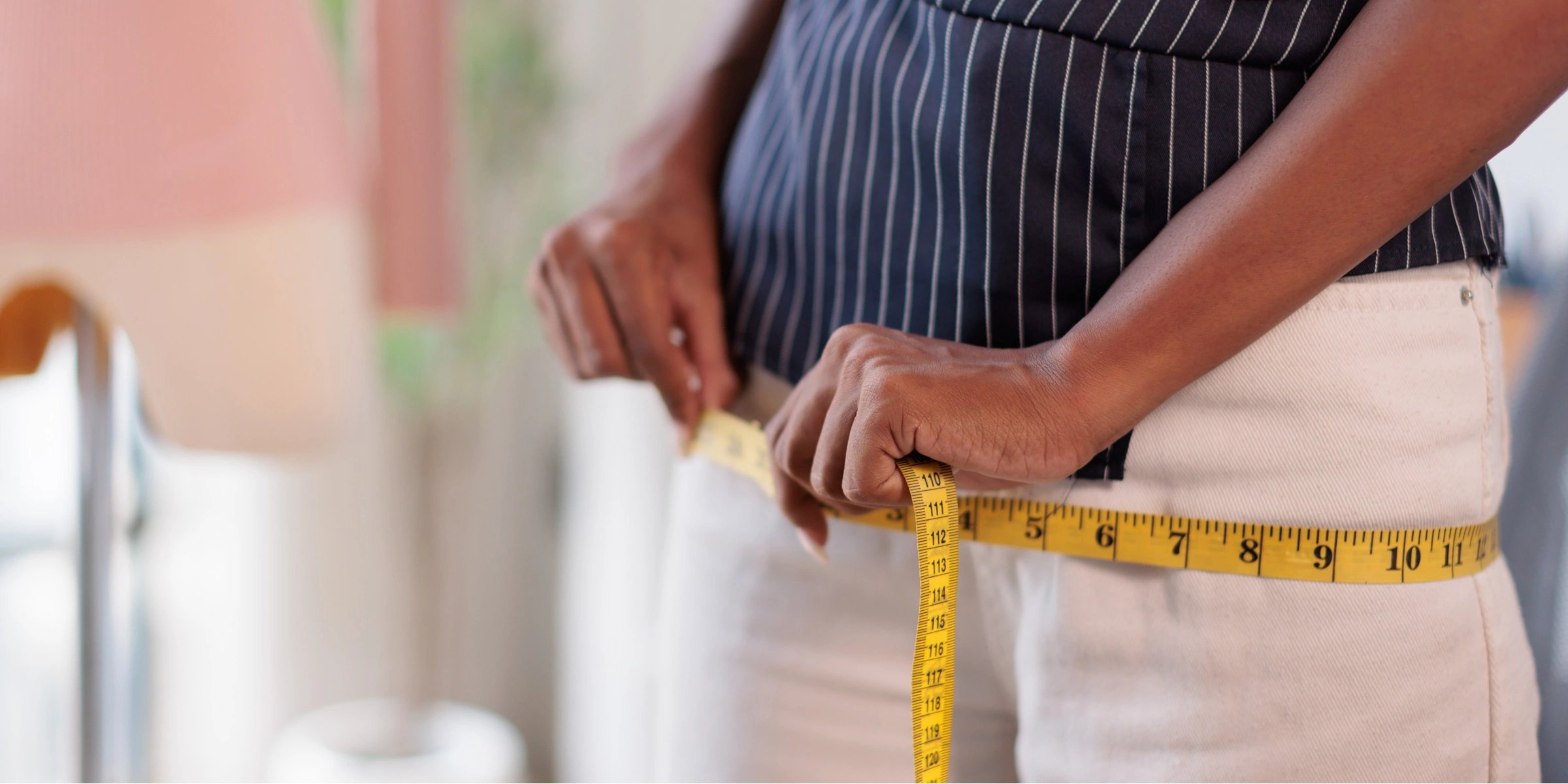

How is weight loss for women different?
The difference lies mostly in where women store fat and when that changes. Hormones and age shape the pattern, and life stages affect energy, sleep and time.
Before menopause, many women carry extra weight on the hips and thighs. Around menopause, fat storage tends to move towards the waist. Jean Hailes for Women's Health links this shift to a drop in the hormone oestrogen. It also notes that hormones are not the main cause of weight gain.
Where fat sits matters for health. Jean Hailes explains that fat around the stomach, called visceral fat, can raise the risk of other health conditions.
Food still does much of the work. See how an energy deficit works in kilojoules, and where protein fits, with nutrition and lifestyle support.
How do life stages change weight?
Weight often changes around pregnancy and in midlife. Knowing why helps you set fair expectations and choose the right support.
Pregnancy and breastfeeding
If you are pregnant, planning a pregnancy or breastfeeding, check with your doctor or midwife before you try to lose weight.
Perimenopause and menopause
Weight gain in midlife is common. Jean Hailes' guide to looking after yourself around menopause says it is more likely due to age and lifestyle. Jean Hailes also reports research suggesting women gain roughly half a kilo a year between 45 and 55.
In Australia, the average age of menopause is 51. Hot flushes, poor sleep and aches can make it harder to stay active, which may add to weight gain. On those days, Jean Hailes suggests moving as much as your body allows.
What helps women lose weight safely?
Building muscle, eating protein at each main meal and protecting your sleep all help. None of these needs a special diet or a strict plan.
- Strength training: resistance exercises such as squats, push-ups and weight training help build muscle. Jean Hailes notes that more muscle means your body uses more energy. See our exercise guidance for how often to train and how to start.
- Protein at main meals: Jean Hailes suggests a palm-sized serve of protein at each main meal to help you feel full. Lean meat, eggs, tinned fish and cottage cheese all count.
- Movement on most days: aim to be active on most, and preferably all, days. Break up long periods of sitting where you can.
- Sleep: good sleep routines can ease menopausal symptoms, and drinking too much alcohol can disrupt sleep. Read how sleep and stress affect weight.
These weight loss tips for women apply at any age, not only around menopause.
A note on food and weight: If thinking about food, weight or numbers starts to feel stressful or hard to control, tell your doctor. You can also call the Butterfly Foundation National Helpline on 1800 33 4673 (8am to midnight AEST/AEDT, 7 days, except national public holidays). If you need to talk to someone now, call Lifeline on 13 11 14.
Which nutrients do women need more of?
When you eat less, keep an eye on iron and calcium. Women's needs for both change with age.
Healthdirect says women aged 19 to 50 need 18 mg of iron a day. Men the same age need 8 mg. Women need more to replace iron lost in period blood. From age 50, women need 8 mg a day. Sources include lean red meat, chicken, fish, legumes, tofu and dark leafy greens.
Calcium needs rise later in life. Women need 1,000 mg a day from 19 to 50, and 1,300 mg a day from 51. In the Australian Dietary Guidelines, that is about 2½ serves of milk, yoghurt, cheese or alternatives a day up to age 50, and 4 serves a day from 51. Calcium-fortified plant milk drinks (with at least 100 mg of calcium per 100 mL) and tinned fish with bones can also help.
When should women see a doctor about weight?
See a doctor if your weight changes without a clear reason, or if it comes with changes to your periods. Some hormone conditions make weight harder to manage, and they need a proper diagnosis.
Cycle changes: periods that become irregular, or heavier than usual, outside of pregnancy or menopause.
Signs of PCOS: irregular cycles, extra hair on the face or body, hair loss from the scalp, skin problems, or trouble losing weight. Jean Hailes notes that polycystic ovary syndrome (PCOS) has been renamed polyendocrine metabolic ovarian syndrome (PMOS).
Signs of an underactive thyroid: unexplained weight gain, tiredness, feeling the cold, and irregular or heavier periods. Healthdirect describes the signs of hypothyroidism and how it is found.
Before your appointment, note your symptoms, your cycle dates and any family history of these conditions. Read what to share as part of your health history, and why it matters.
If any of these signs apply, see your doctor before you start a weight loss plan. For more on food, movement and habits, browse our weight loss guides.